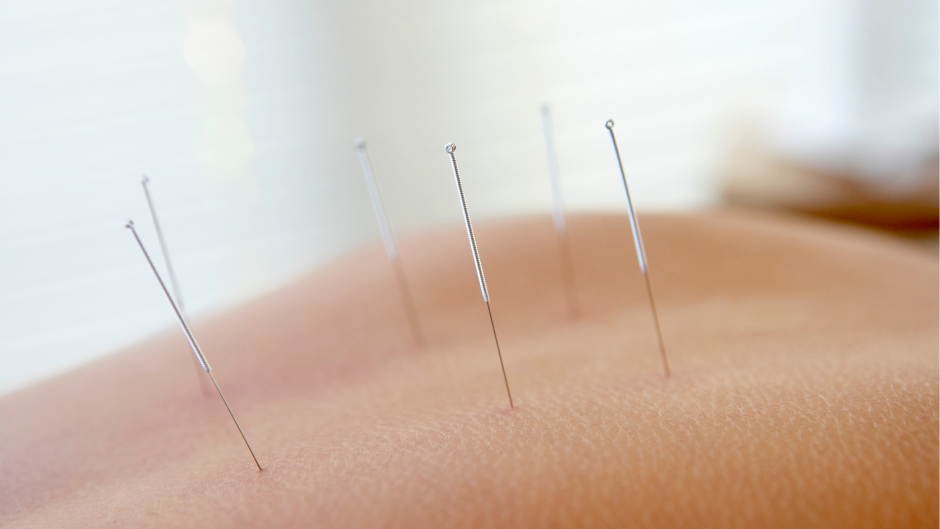
Dry Needling Benefits Beyond Pain: Scars, Swelling & Healing | Prescott AZ

When most people hear dry needling, they think of tight muscles, trigger points, and pain relief. And yes—those are important applications of dry needling. But dry needling can be used for much more than treating a tight muscle. At McKinney Physical Therapy in Prescott, AZ, we also use specialized dry-needling techniques as part of a comprehensive treatment plan for:
Post-surgical pain and swelling
Scar restrictions- especially mastectomy and C-section
Lymphatic edema
Tissue mobility
Nervous system regulation
The goal isn't simply to "stick a needle in a tight muscle." The goal is to use the needle as a precise tool to influence tissues and the nervous system in ways that support movement and recovery.
Can Dry Needling Help With Inflammation and Swelling?
One of the less familiar potential benefits of dry needling is its effect on the body's local physiological response. Research into dry needling is beginning to explore how needling may influence local blood flow, inflammatory signaling, and cellular processes involved in tissue healing. Integrative Dry Needling, for example, discusses research examining dry needling's effects on inflammatory mediators, including cytokines and macrophage activity.
Clinically, this can make dry needling an effective tool to normalize painful, congested, swollen tissue to return to normal after injury or surgery. However, swelling has many possible causes.
Dry needling is not a substitute for medical evaluation of unexplained or excessive swelling, and treatment must be appropriately timed after surgery.
Dry Needling for Post-Surgical Swelling and Stiffness
After a joint replacement or other orthopedic surgery, swelling can contribute to pain, stiffness, and difficulty restoring normal movement. Dry needling may be incorporated into rehabilitation to address associated muscular restrictions and post-surgical pain while you work on mobility, strength, and function.
Research has found benefits from dry needling combined with physical therapy in people experiencing persistent pain and movement limitations after total knee replacement.
The key is that dry needling is one piece of the rehabilitation process, not a replacement for exercise, mobility work, progressive strengthening, or appropriate medical care.

Dry Needling for Scars and Surgical Restrictions
A scar is more than a mark on the skin. After surgery, scar tissue can become less mobile than the surrounding tissue. It may contribute to pulling, sensitivity, restricted movement, or discomfort. This is especially important after surgeries involving large areas of tissue disruption. Specialized dry needling techniques can be used to address restrictions around healed surgical scars and may help improve tissue mobility and pain.
A review of dry needling for scars found preliminary evidence that scar needling may improve scar appearance and pain, although the research base is still limited and more high-quality studies are needed.
Intricate Art Spine & Body Solutions also describes using dry needling to address scar tissue and associated tissue restrictions, including scars that may be contributing to problems farther away from the original surgical site.
An Often-Overlooked Application: C-Section Scars
A C-section scar may be small compared with the overall abdomen, but it can affect the mobility of the surrounding skin, fascia, abdominal wall, and nervous system. Some women experience:
• Pulling or tightness around the scar
• Abdominal or pelvic discomfort
• Sensitivity or numbness
• Restrictions with movement
• Pain with certain activities
• Persistent tissue restrictions long after the incision has healed
Changes in bowel or bladder function
Dry needling may be incorporated into a broader postpartum physical therapy program to address restrictions in and around a fully healed C-section scar. It is not about "breaking up" a scar. It is about influencing the tissues around the scar and improving how those tissues move and interact.
Dry Needling After Mastectomy
Mastectomy and other breast surgeries can create complex changes involving the skin, fascia, muscles, nerves, and lymphatic system. Some people develop persistent pain, sensitivity, restricted shoulder motion, chest-wall tightness, or other post-surgical symptoms.

Dry needling may be one component of physical therapy for these problems. Research specifically examining post-mastectomy pain has found promising results for dry needling, including reductions in pain and disability in a small clinical study. A recent systematic review also identified dry needling among the physical therapy interventions showing benefit for post-mastectomy pain syndrome.
Importantly, treatment after breast surgery requires specialized anatomical knowledge and careful screening. Dry needling is not appropriate over every surgical area, implant, compromised tissue, or active medical condition.
What About Wounds and Hematomas?
This is where timing and clinical judgment are particularly important. Dry needling should not be viewed as a treatment for an open wound in the typical physical therapy setting. Needling through compromised tissue can increase the risk of bleeding, infection, or other complications.
However, once tissues have appropriately healed—and when medically appropriate—a trained physical therapist may use specialized techniques around previously injured or surgical tissues to address residual restrictions, pain, or altered tissue mobility.
Your physical therapist should determine whether dry needling is appropriate based on the stage of healing, medications, tissue integrity, surgical history, and overall medical status.
Dry Needling and the Autonomic Nervous System
There is another fascinating application of dry needling: the autonomic nervous system (ANS). Your ANS regulates many automatic functions of the body, including heart rate, digestion, blood pressure, and the balance between sympathetic "fight-or-flight" and parasympathetic "rest-and-digest" activity.
Research has demonstrated that dry needling can produce measurable autonomic responses, although the mechanisms and clinical implications are still being investigated.
At McKinney Physical Therapy, we may incorporate strategically targeted dry needling into a broader approach to help regulate the nervous system—particularly when persistent pain, stress, or an overactive protective response appears to be contributing to someone's difficulty recovering.
Dry Needling Is More Than a Trigger-Point Technique
Dry needling can be a valuable tool for addressing much more than muscular trigger points.
Depending on the individual and the stage of healing, it may be incorporated into treatment for:
Persistent muscle pain and tightness
Post-surgical pain
Scar restrictions
Post-operative stiffness
Appropriate post-operative swelling
C-section scar restrictions
Post-mastectomy pain and tissue restrictions
Myofascial restrictions
Nervous system regulation
Post injury pain and swelling
The most important point is that dry needling is not a stand-alone cure. At McKinney Physical Therapy, we combine dry needling with movement assessment, manual therapy, mobility work, strengthening, and individualized rehabilitation. If you have pain, swelling, restricted movement, or persistent symptoms after surgery, don't assume that the problem is simply "tight muscles."
There may be more going on. A comprehensive physical therapy evaluation can help determine what tissues and systems may be contributing—and whether dry needling is an appropriate part of your recovery plan.
Dry Needling in Prescott, AZ
McKinney Physical Therapy provides specialized dry needling as part of individualized physical therapy in Prescott, Arizona. Our therapists have advanced training in dry needling and use it alongside other hands-on and movement-based approaches.
If you're recovering from surgery, dealing with a persistent scar, experiencing post-operative stiffness or swelling, or struggling with pain that hasn't responded to conventional treatment, contact McKinney Physical Therapy in Prescott, AZ to find out whether dry needling may be appropriate for you.

Important Note
Dry needling is not appropriate for every person or every stage of healing. Treatment around surgical sites, scars, swelling, breast tissue, implants, wounds, or areas of bleeding requires careful screening and appropriate clinical judgment. Always follow your surgeon's restrictions and communicate your surgical history and medications to your physical therapist.